
How We Read the News: From Saturday Mornings with Magazines to Endless Scrolls
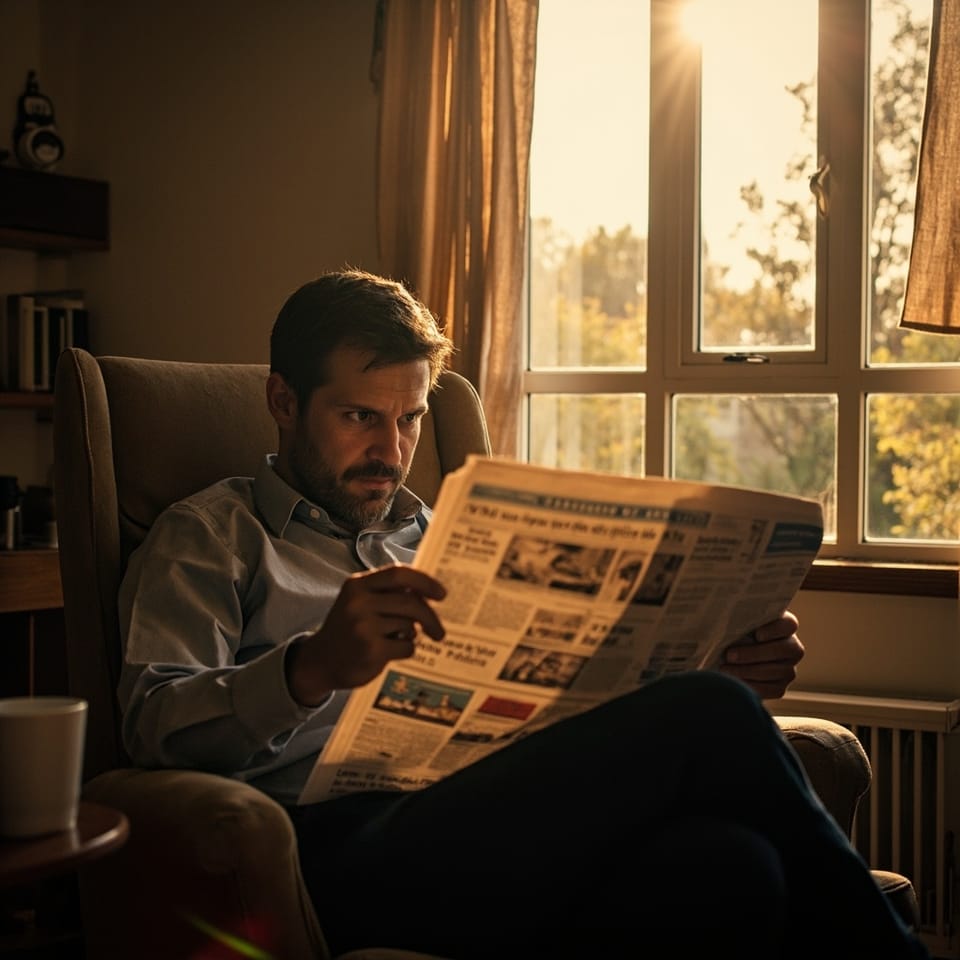
Remember the ritual? Saturday morning. Coffee. A magazine or the weekend newspaper. Unhurried. Predictable. Yours. That ritual is gone — and it’s not coming back. Here’s what five research-backed articles tell us about how news reading fundamentally changed, and what replaced the quiet pleasure of a Saturday morning with a print magazine.
The Old World: News as Ritual
Before the internet, consuming news was a trained behavior — a habit so deeply embedded it felt natural. Henri Lefebvre called it “dressage”: the social training of bodies into repetitive rhythms. News organizations essentially conditioned us to read the same newspaper at the same time every day, watch the evening broadcast, or listen to a specific radio station during the commute.
As one participant in a Nieman Lab study put it: you knew exactly when to expect your news. The structure was built in. Groceries, coffee, the paper. Or: Saturday morning, the Sunday Times, no rush.
The rhythm of the media day was designed — morning light and lively news, evening softness for winding down, Sunday for long-form reflection. Publishers knew empirically how to use these rhythms. Audiences were trained into them.
The Explosion: News Everywhere, All at Once
Then smartphones arrived and exploded the ritual.
The internet didn’t just add more news sources — it dissolved the temporal and spatial boundaries of news entirely. News became everywhere, at all times, in all formats, backed by every ideology, aimed at every audience worth showing a banner ad.
"Yeah, I feel like before we had cellphones, we just used to watch the regular news at night. But nowadays on the phones, you get alerts from Apple News telling you, hey, something happened in California. I didn’t even sign up for it, but it just comes."— Man in his 40s, Pew Research
"There’s more options now to consume news. You have these podcasts. You can check the news on social media sites… even when you open a social media site like Twitter, there’s news everywhere."— Woman in her 30s, Pew Research
The scheduled media rhythm that felt “authentic” was replaced by continuous, unanchored digital flow. The ritual was replaced by notification and interrupt.
The Business of Attention: When Publishers Chased the Algorithm
Between 2013 and 2017, something interesting happened: publishers chased the platform, writes The Atlantic. Facebook had quietly tweaked its News Feed algorithm, and suddenly hundreds of news organizations saw massive traffic spikes. More clicks meant more ads meant healthier businesses.
So publishers adapted. They wrote clickbait. They optimized for the algorithm. They chased virality. BuzzFeed — with its listicles and quizzes — at one point drew more visitors than the New York Times. The serious long-read was losing to the trending meme.
"Your social media newsfeed has replaced ‘Page A1’ of the daily newspaper."— Social Media HQ
The news cycle stopped being weekly (hello, Sunday magazines) or daily. It became 24/7 breaking news, where if you’re not posting at the moment a story breaks, you’ve already missed it.
The Breaking Point: When Readers Also Walked Away
Here’s what the platforms don’t like to admit: readers broke up with news too.
According to The Atlantic, Pew data shows that in 2022, just 12% of Americans turned to newspapers for daily news consumption — compared to 37% using social media. More broadly, only 38% of American adults say they regularly follow the news, down from a high of 52% in 2018.
The decline isn’t only about where people get news. It’s about whether they bother at all.
One personal account from a blogger at idratherbewriting.com captures the feeling:
"I don’t like lying in bed and click-scrolling articles on my phone in an endless way. This easily leads to clicking links in more newsbaity publications, and soon I shift from reading the New York Times to Reddit or other sources, and my attention is drawn to shortform content that is quirky, bizarre, temporarily jaw-dropping, shocking, odd."— idratherbewriting.com
The hierarchy of print — front page, section A, editorial — gave readers a sense of what mattered. The feed gives everything equal weight. Without editorial judgment, readers drift.
What We Lost: Structure, Ritual, and the Unhurried Moment
The Saturday morning with a magazine wasn’t just about convenience. It was a container for attention: a designated, enjoyable, structured time to sit with curated information.
What we gained instead: abundance. Instant access. Personalization. Alerts. Push notifications. Podcasts. Influencer news summaries on TikTok.
What we lost: the pause, the hierarchy, the ritual, the Saturday morning.
The Bottom Line
The transformation wasn’t simply “print to digital.” It was ritual to reflex, curated to algorithmic, scheduled to continuous, and unhurried to infinite scroll.
The good news? People still want quality journalism. The demand for thoughtful, well-crafted content never went away. What’s changed is how people find it, when they consume it, and whether they stick around long enough to let it sink in.
Publishers who understand this shift — and design for it — will be the ones that survive.
Sources
- Nieman Lab — The old habits of news consumption died with the internet. What’s replacing them?
- The Atlantic — Social Media Broke Up With News. So Did Readers
- Pew Research Center — Why Americans think news habits are changing, in their own words
- Social Media HQ — Social Media Has Forever Changed The Way We Consume News
- idratherbewriting.com — Experiments: Will reading a physical newspaper improve the way I consume news?
This post was created as an overview of publicly available articles on the transformation of news consumption habits.